
Champaign County Has No Rolling Blotter
The sheriff's office keeps no rolling blotter. There is no continuous 72-hour feed. Instead it publishes dated daily PDFs. An arraignment report, a daily jail report, and archived daily reports fill out the picture. Periodic Police Press Reports add narrative. Treating these as one feed would hide gaps and duplicate events. Booking activity could even blur into court activity. The launch point is the Sheriff Public Documents page. For a multi-day arrest search, open each dated file and note both the document date and the event date, since an archived report can still list someone the live roster omits because it covers current custody only.
Read Champaign County Arrest Archives
Start with custody records, not headlines. A press release is not a booking list. Work backward from Champaign County jail records toward agency narratives.
- Start at the sheriff's Public Documents hub and identify each daily file covering the target dates.
- Record the print date, confinement date, SO number, name, and arresting-agency code for each relevant booking.
- Check the periodic Police Press Reports for a narrative selected by the sheriff, without expecting every booking to appear.
- Consult the applicable city or university police log for the incident record and its own publication limits.
- For dates beyond what remains online, submit a focused request to the sheriff or arresting agency that holds the record.
Need only the newest cycle? The Arrests Last 24 Hours page explains the same-day PDF and the current-custody fallback, though a multi-day Champaign County arrest search should not lean on that narrow view alone.
Champaign County Blotter Entry Fields
The county booking PDF is the broad name-by-name source. Police media reports add narrative only when an agency publishes one, so tie each field name and date back to its source.
| Entry detail | How to interpret it |
|---|---|
| Name and SO number | Identity label and sheriff reference for matching records. |
| Confinement date/time | When jail intake was recorded, not always incident time. |
| Arresting agency | CCSO, CPD, UPD, UIPD, RPD, or another listed agency. |
| Charges | Charges recorded at booking, not a disposition. |
| Bond | Report-time amount or type, which can later change. |
| Confined / location | A report snapshot, including Jail or Out of Facility. |
| Image | A column exists, but public photo display is not promised. |
| Media narrative | Selected incident context, not proof of full log coverage. |
Two columns matter most: Image and Confined. A dated booking row can outlast current custody. An image flag does not promise a viewable photo. The county states no retention period for booking photos, and the Sheriff Public Documents page shows the official archive of dated reports.
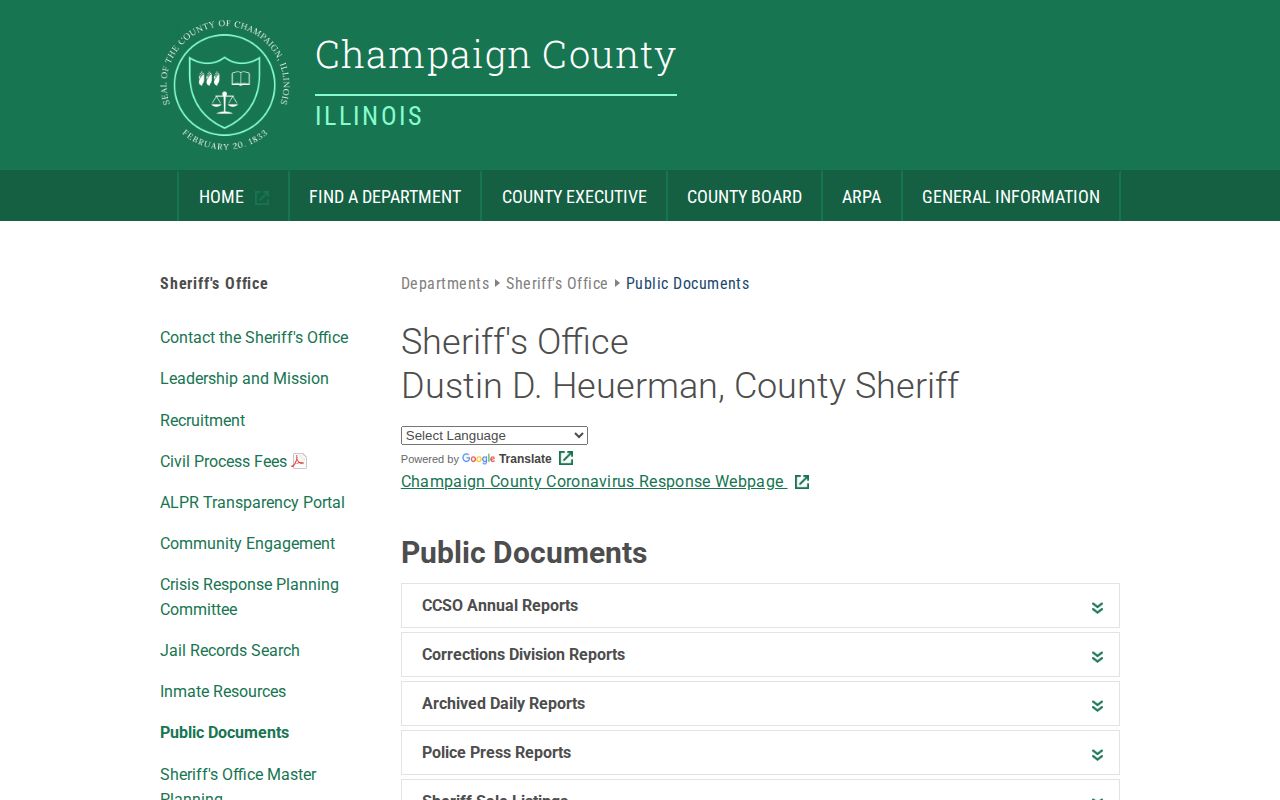
Dated reports are online today. That is not a promise every past day or booking photo stays posted forever.
City Police Reports Around Champaign County
The local windows differ. Champaign Police posts media reports Monday through Friday and keeps them available up to 30 days, with omissions allowed to protect victims or comply with law. Urbana posts most media reports but promises no fixed window. Rantoul provides police records and FOIA routes. It publishes no separate public arrest blotter. The University of Illinois Police Department maintains a distinct daily crime log and police blotter covering the latest 60 days, updated as often as possible. UIPD warns that not every item appears in its crime-activity or arrest views. It is an incident source for campus jurisdiction. The sheriff report remains the county booking source. The UIPD log page documents that separate window.
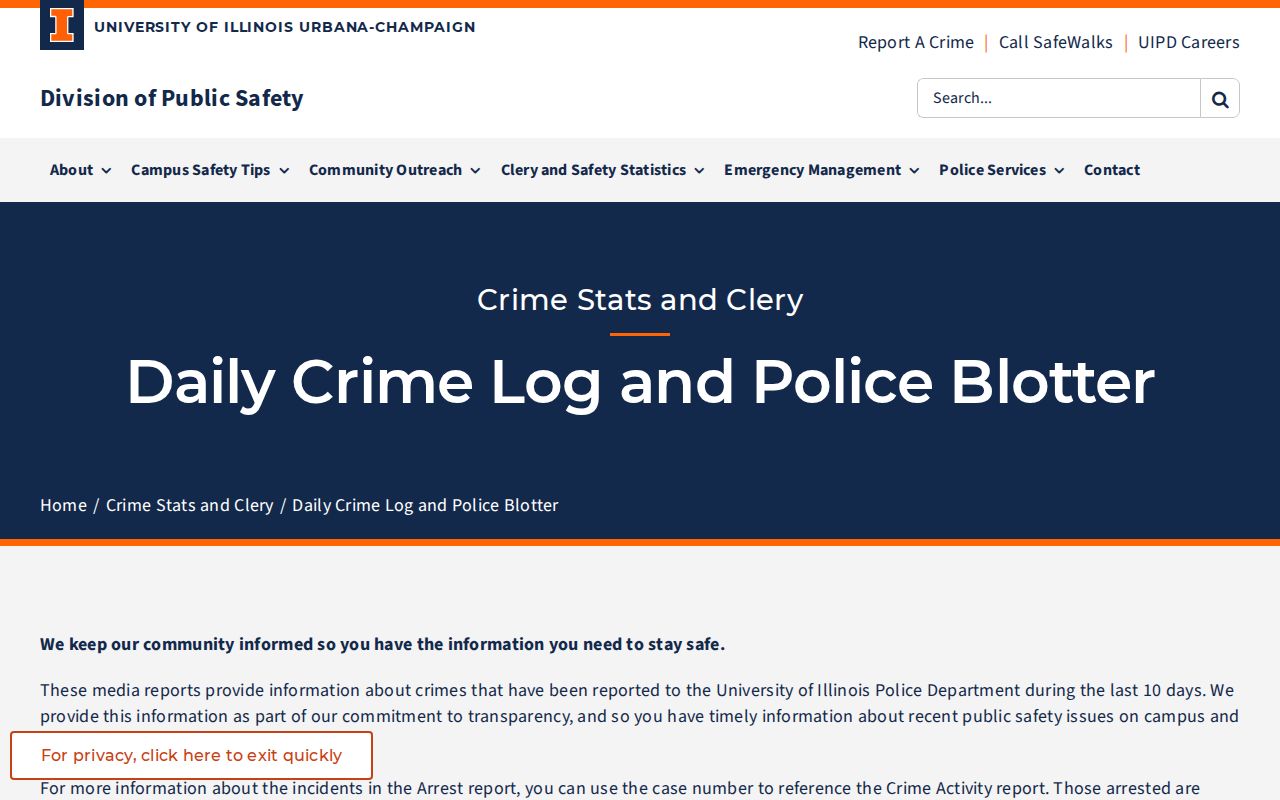
Campus context helps, but the sheriff report stays the true Champaign County booking source.
Champaign County Police Press Reports
Sheriff Police Press Reports are periodic crime-activity and arrest PDFs. They come closest to a county blotter narrative. But they are selective. A press report explains one event chosen for release. The daily booking PDF records jail intake far more broadly. No stated rolling window governs the press documents. No uniform booking-photo practice is promised either. Use the agency narrative to understand the incident, then the booking record for intake and the Circuit Clerk for filed charges. A police report can be withheld or redacted for lawful reasons. A missing report never means no arrest happened.
Note: Police press reports add selected context; they do not replace the daily booking record or establish present custody.
News Is Not an Arrest Archive
Local news runs on events, not schedules. The Daily Illini crime section covers Champaign, Urbana, and university-area stories. It is not a county booking window. Illinois Public Media and regional television also report selected arrests and court events. Editorial photos are not official booking photos. The News-Gazette stopped publishing its online booking-mugshot gallery, as a Smile Politely report documents. That history matters. Old search results can mislead. No local newspaper mugshot gallery exists now, and the Daily Illini crime archive stays a secondary news source.
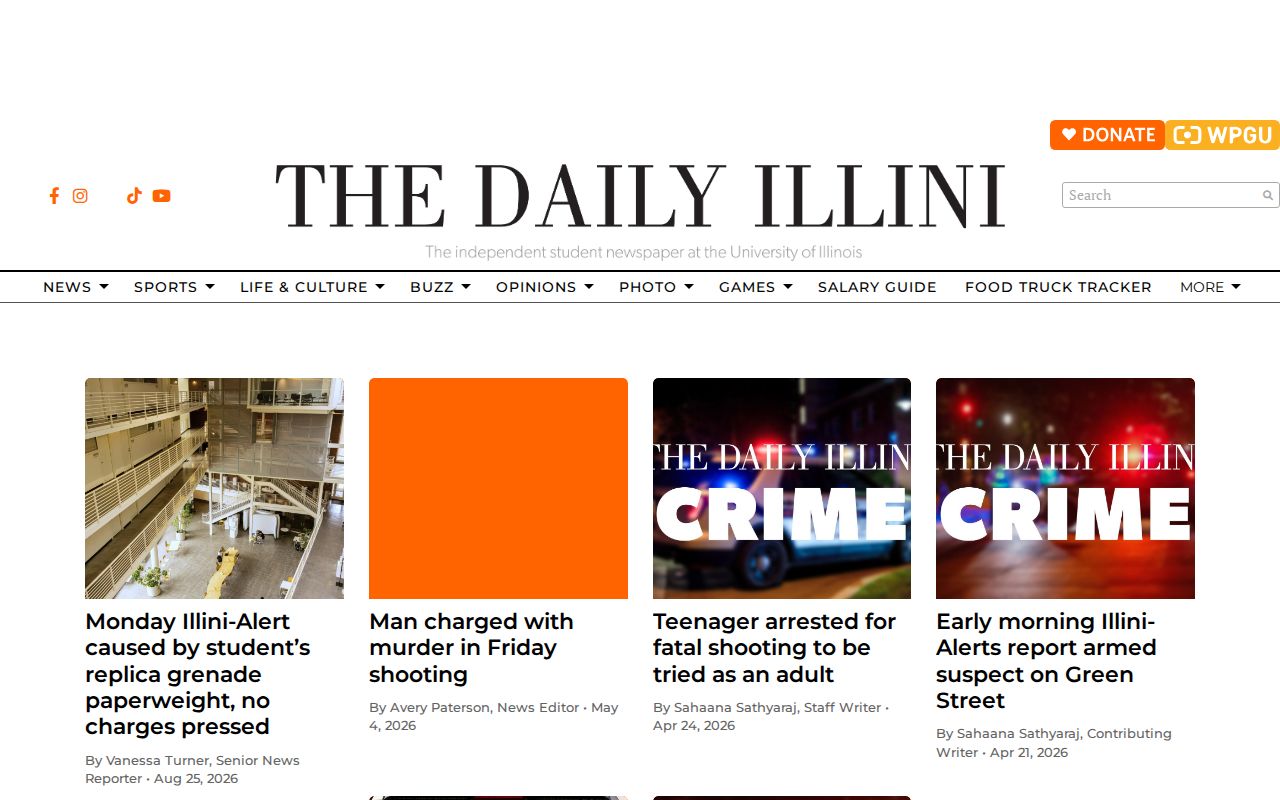
It shows editorial choices, not a county arrest list.
Champaign County Arrest Counts Need Context
Numbers help, but only with the right frame. The sheriff's annual report counts 4,193 jail intakes in 2024. Average daily population sat at 235. The same series shows a steep drop across 2020 and 2021. A rebound followed from 2022 through 2024. Those are jail numbers, nothing more. They are not counts of unique people. They also leave city crime rates out of the picture entirely.
Booking records mix units in ways that trip up careless readers. One incident may end with no county booking at all. A single booking can carry several charges. One person can even pass through intake more than once in a year. Compare Champaign County trends only when those units stay separate.
Request Older Champaign County Arrest Records
Older Champaign County arrest records follow state rules, not website habits. Daily-report links on the sheriff's public page reach at least into 2025. That is not a retention schedule. Illinois local records move through approved retention and disposal processes. Retention does not force a document to stay online or stay open past an exemption review.
For an older sheriff booking, start with the Sheriff FOIA form. Written requests work best when they identify the person, the arrest date, a report or case number, the record sought, and a preferred delivery method. Keep the request narrow. The sheriff's contacts page lists Criminal Records at 217-384-1234. City police hold their own incident reports. Ask the agency directly. The Circuit Clerk keeps the later court file.
Note: Online visibility and lawful retention are separate; request the maintained record and allow the custodian to apply current access rules.
Public Record Search
Sponsored Results